
Morocco Souk Prices: How Much Do Souvenirs Cost?
Find typical prices for Moroccan rugs, leather goods, pottery, spices, babouches and other popular souvenirs, with practical bargaining tips.
Shopping in a Moroccan souk is half the fun of visiting — rugs, leather bags, pottery, spices, babouches, all of it tempting you from every stall. What trips up most first-timers isn't finding something to buy, it's figuring out whether the price they've just been quoted is fair.
Souk prices aren't fixed the way a supermarket's are. The same rug or bag can be priced very differently depending on quality, size, craftsmanship, which shop you're standing in, and how much comparing you've bothered to do. A higher price isn't automatically a rip-off, and the first number you hear isn't automatically the price you're stuck with.
Below are practical price ranges for the things people actually buy in Moroccan souks, along with what pushes those prices up or down. Treat the numbers as a reference, not a guarantee — they shift from city to city and shop to shop.
Before you bargain: how souk pricing works
Bargaining is standard in most souks, especially for souvenirs, clothing, leather goods, rugs, and handicrafts. Sellers usually open high and expect some back-and-forth before landing on a number both sides like.
You're not chasing the lowest possible price. You're aiming for a purchase where you understand what you're buying, have a rough sense of what similar items cost, and feel fine about what you paid.
Quality matters more than it looks. Two leather bags that seem nearly identical can differ completely in materials, stitching, and how they were made — comparing price alone tells you almost nothing.
A useful habit
Unsure about a price? Check the same item in two or three other shops first. A few minutes of comparing gets you a real reference point.
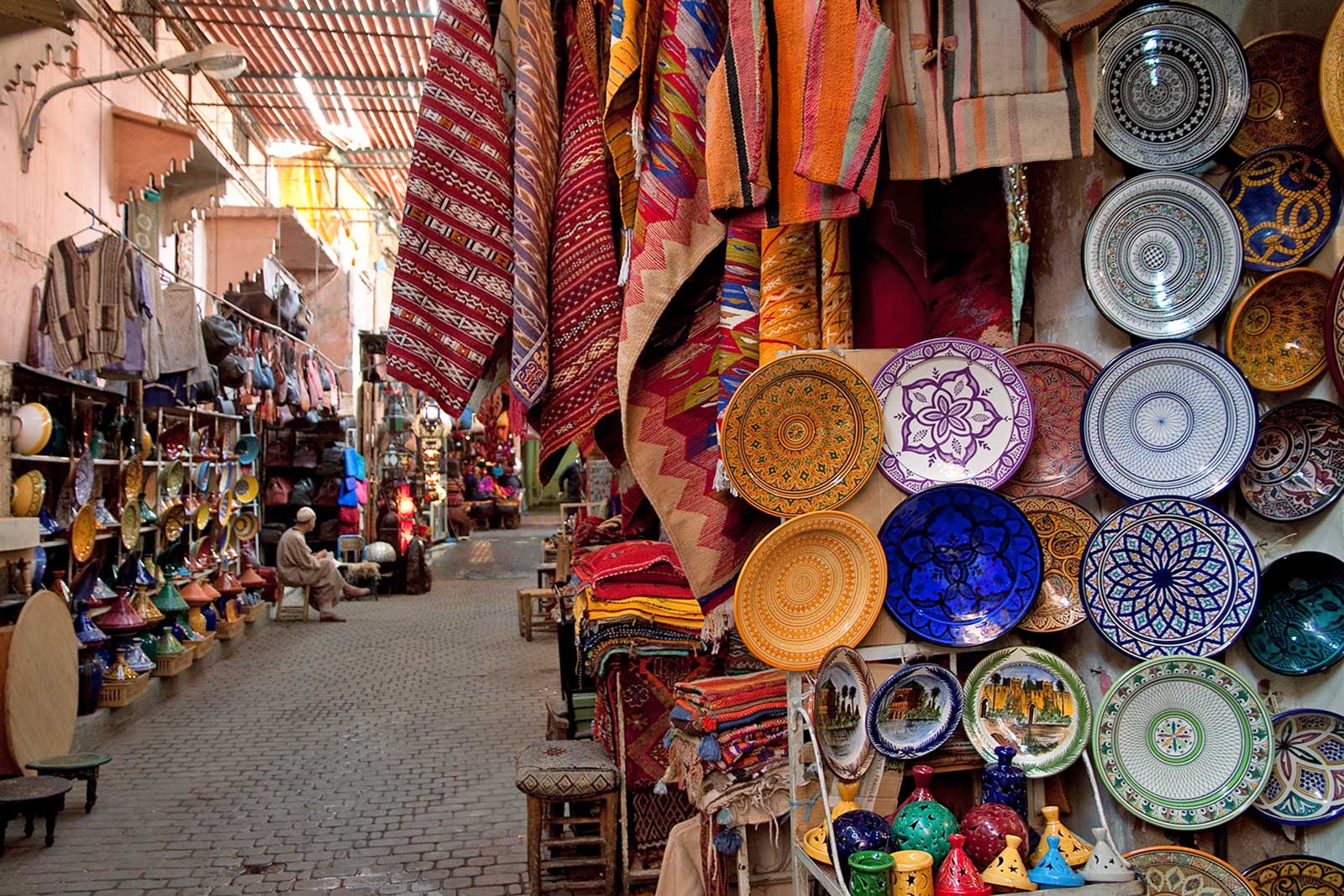
Moroccan rugs and carpets
Rugs are a top souk purchase and also one of the hardest to put a single price on. Size, material, age, weave, design, and whether it's handmade all move the number.
Small decorative rugs stay cheap; larger handmade ones can run into the hundreds or thousands of dirhams. A steeper price doesn't automatically mean you're being overcharged if the craftsmanship backs it up.
Ask about the material, rough size, whether it's handmade, and whether shipping is included in the quote. For anything substantial, look at a few rugs before committing.
- Small decorative rugs: roughly 200–600 MAD
- Medium handmade rugs: roughly 600–2,000+ MAD
- Large or highly crafted rugs: 2,000 MAD and up
Leather bags and wallets
Leather goods are a souk staple, especially in cities known for their tanneries — wallets, belts, handbags, backpacks, travel bags, the whole range.
Price rides on size, leather quality, stitching, lining, and construction. A basic wallet costs little; a larger handmade bag climbs fast.
When you're weighing two bags, don't stop at looks. Check the stitching, the lining, the zippers, how the leather actually feels — that's usually what explains the price gap between two bags that look nearly the same.
- Small leather wallets: roughly 50–150 MAD
- Belts and small accessories: roughly 80–200 MAD
- Leather bags: roughly 200–700+ MAD
Babouches and traditional slippers
Babouches pack easily and come in every color and style imaginable. Price depends on whether you're getting simple everyday slippers or something more detailed and handmade.
A basic pair should be cheap. Better leather and decorative stitching push the price up from there.
Try them on, check the stitching and sole, and if you're buying several pairs, ask whether the seller will do a better price for the lot.
- Basic babouches: roughly 50–120 MAD
- Better-quality leather babouches: roughly 100–250 MAD
- Decorative or handmade designs: 150 MAD and up
Pottery and Moroccan ceramics
Moroccan pottery spans small decorative pieces up to full tagines and hand-painted serving dishes. Price tracks size, decoration, craftsmanship, and whether the piece is meant for daily use or just for display.
Small bowls stay cheap; detailed hand-painted ceramics cost noticeably more. If you're carrying pottery home, ask whether the shop can pack fragile pieces properly for travel.
Don't judge purely by how decorated something looks — the quality of the finish matters just as much, especially if you actually plan to use the piece rather than just display it.
- Small bowls and simple ceramics: roughly 30–100 MAD
- Decorated plates and serving pieces: roughly 80–300 MAD
- Larger or highly detailed pieces: 200 MAD and up
Spices and Moroccan food products
Spices are the easy souk buy — small quantities, low cost. Saffron, cumin, paprika, ras el hanout, and other blends show up everywhere.
The real price swings come from what you're actually buying and its quality. Saffron especially — the price range on that one is huge depending on what's in the jar.
If you're not sure what a spice is or how the price was worked out, just ask before you pay.
- Common spices: roughly 10–40 MAD for a small quantity
- Larger quantities or blends: roughly 30–100+ MAD
- Premium products can run well beyond that
Argan oil and cosmetics
Argan oil is everywhere — souks, markets, cooperatives, specialty shops — in both cosmetic and culinary versions, with prices moving with size, quality, and where you buy it.
Check whether it's meant for cosmetic or culinary use and read the packaging closely. A suspiciously low price usually means diluted oil, not a lucky find.
For bigger purchases, a cooperative or established shop makes it easier to know what you're actually getting.
- Small bottles: roughly 50–150 MAD
- Larger or higher-quality bottles: roughly 100–300+ MAD
- Specialized cosmetic products can cost more
Lanterns and Moroccan home decor
Lanterns, mirrors, trays, and other decor pieces make good souvenirs, with prices swinging widely based on material, size, and how much handwork went into them.
Small decorative pieces are cheap; big metal lanterns or intricate handmade designs can run several hundred dirhams or more.
Buying something large or fragile? Ask how they'll pack it for your trip home — a slightly higher price is often worth it if it comes with real packaging.
- Small decorative items: roughly 50–150 MAD
- Medium lanterns and decor: roughly 100–400 MAD
- Large or detailed handmade pieces: 300 MAD and up
The first price isn't the final price
In a traditional souk, the opening price is usually the start of a conversation, not a fixed number carved in stone. That doesn't mean every seller expects you to cut it in half.
Ask the price, weigh whether it feels reasonable, and counter with a number you'd genuinely be happy paying. Keep it friendly — it's a negotiation, not a contest.
Can't agree on a number? Thank the seller and move on. There's usually a similar item a few stalls over at a price you like better.
How to avoid overpaying
Slow down — that's most of it. Souks are busy and the pressure to decide on the spot is real, but you almost always have time to think.
Compare similar items, ask what's included in the price, and make sure you know the total before you hand over cash. Buying multiple items? Confirm whether the quote covers one piece or the whole stack.
And only buy what you actually want. A seller spending ten minutes showing you something doesn't obligate you to buy it.
- Compare similar products before buying
- Ask the price and confirm the final total
- Check quality, not just price
- Don't let anyone rush your decision
- Walk away politely if it's outside your budget
What if the price feels too high?
Realize a price is more than you expected? No need to make it a confrontation. If you haven't agreed to buy, just thank the seller and keep browsing.
If you've already agreed on a number, double-check both sides mean the same amount before the money changes hands — worth a moment's extra care on anything expensive.
Bargaining isn't about proving you got the rock-bottom price. It's about landing somewhere that feels fair to you both.
Travel tip
Souk prices swing a lot with quality, size, and craftsmanship. Use the ranges above as a starting point, then compare similar items before deciding what feels fair.
Buy with confidence, not pressure
Souks are part of what makes traveling in Morocco memorable — the colors, the craftsmanship, the sheer variety. Shopping here is genuinely fun once you know roughly what to expect.
You don't need to turn into a master negotiator. Know the rough going rate, look past the surface at the quality, ask questions, and be willing to walk away. That's enough to enjoy the experience without second-guessing every purchase afterward.
Found this useful?
Share it with someone planning a trip to Morocco.